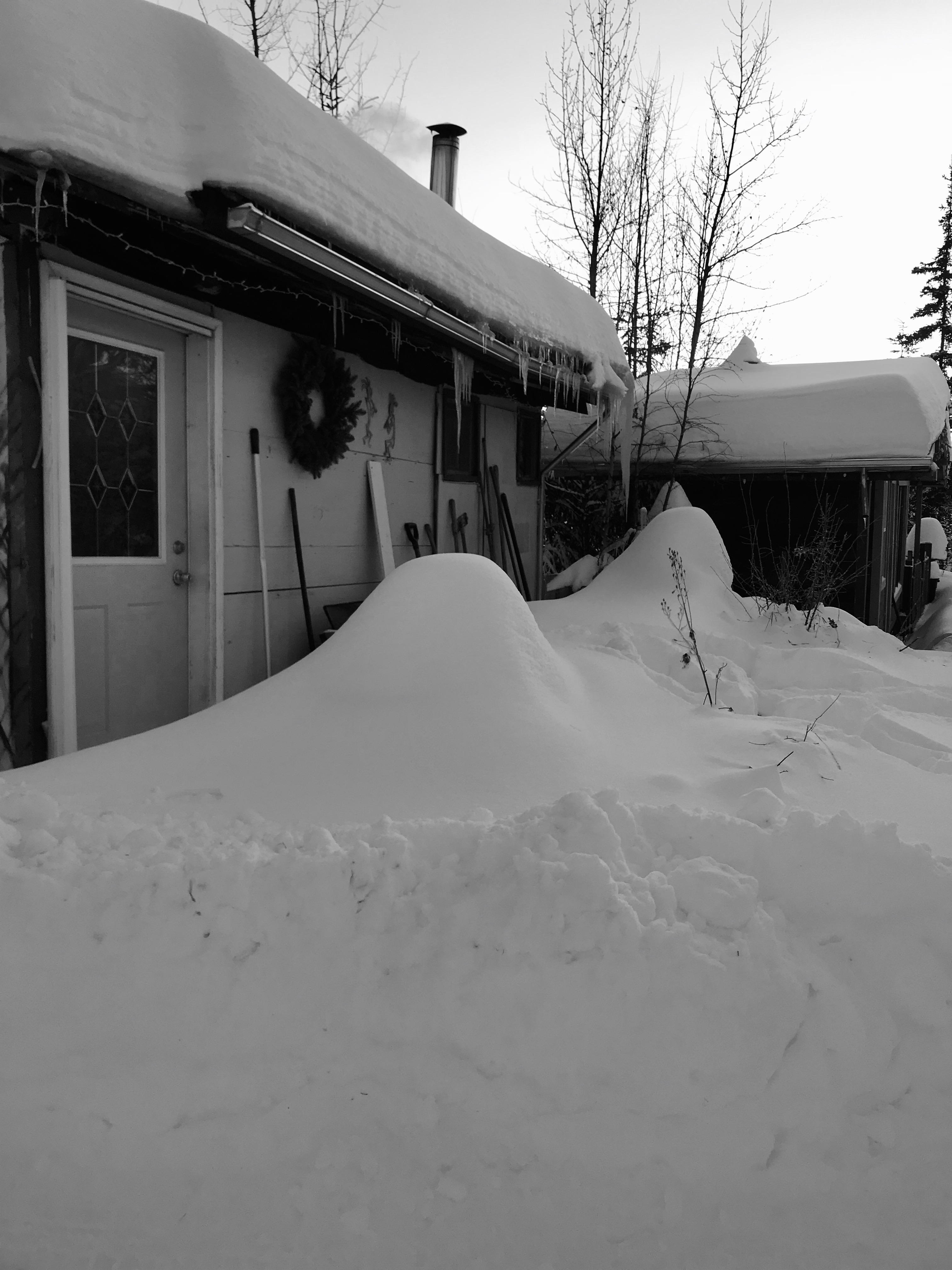
We saw some oddities in our weather, not just in December, but throughout 2021.
On Christmas Day, Fairbanks was considerably warmer than Ketchikan far down the coast, as Ketchikan celebrated their coldest December 25th on record.
A day later, Kodiak hit 67F, which is the warmest temperature ever recorded, anywhere in Alaska, in the month of December. That broke Kodiak’s record high for the day by 9F. It was warmer in Kodiak than Los Angeles or Seattle. Cold Bay also destroyed their old record high on the same day, with a temperature of 62F. The previous record high for the day was 44F!
Alaska 2021 Review
The North Slope saw extended thunderstorms, and Fairbanks set an all time record for precipitation. Yakutat, Alaska’s surfing hot spot, saw 67F in mid-April, and a day later, Klawock experienced the earliest 75F ever in the State.
Nome saw six blizzards over a three week period, Buckland saw spring flooding, and the Noatak experienced extreme summer rain.
Anchorage had an early heavy snow, King Salmon had a chilly autumn, and our capital experienced their coldest December in almost 40 years.
I was debating taking last week off completely from the blog, then the storm hit, and my days were filled with shoveling and plowing.
Officially, the ten day storm brought 30.2 inches of snow. You’re thinking: “Piece of cake”. It probably would have been if we didn’t have 1-1/2″ of freezing rain in the middle of the 2-1/2 feet of snow. It was simply a mess out there.
In the end, I had 52″ of snow fall at the cabin in the month of December. That’s good for second place in all recorded Decembers, and the fourth ever snowiest month. Total precipitation rivaled August 1967, when Fairbanks had its historic flood.
Not to be left out, Denali National Park HQ recorded 78″ of snow in December, breaking the monthly record.
We do not have any snow in the coming week’s forecast, which I’m beyond thrilled about. We have some digging out to do, but we seem to be heading back to more normal weather. Sunday morning saw temps at -40F/C. Thank goodness.
One of the many quirks of Fairbanks is the temperature inversions that takes place in the Tanana Valley and the surrounding hills. The temperature difference, as the map shows, can be quite substantial. Those living up in the hills, will leave relatively moderate temps, and drive down into increasingly chilling temps and the growing murk of ice fog.
It was -36F at the cabin on Monday morning, which does add to the motivation to return to life in the hills. But the firewood bin is full, the stack robber cleaned and throwing out heat of its own, and overall, life is just fine.
The low was -37F in Fairbanks on Saturday morning. By 10am on Monday, the temperature had risen to +25F. An increase of 62 degrees. Consider: It would be the same swing as going from 32F to 94F.
The 25F degrees was the warmest we have been since November 7.
As forecast, a Chinook blew into Interior Alaska this past weekend, driving temps in Fairbanks up into the 40’s. It was +44F at 8am in the valley on Sunday morning. The average high on Halloween is +18F. Also, as expected, our dusting of snow became a few patches of white.
Further south in Alaska: The NWS station in Girdwood at Alyeska recorded 9.5″ of rain in a 24 hour period. Nearby Porter Glacier Visitor Center recorded 10.34″ of rain on Saturday. It is the first 10+ inch precipitation event in 24 hours in Alaska since 2012. The storm total at Portage Glacier was 17.72″, as of Sunday evening. The epicenter for this event is Mount Baker, which is just 75 miles east of Anchorage, but 13,000 feet higher. The forecast for the slopes of Mount Baker “Snow could be heavy at times”. SATURDAY AFTERNOON: 29-35″; SATURDAY NIGHT-SUNDAY MORNING: 108-114″ Possible; SUNDAY AFTERNOON: 82-88″; SUNDAY NIGHT: 100% Chance of Snow, Heavy At Times.
Starting on Tuesday, the official average daily high temperature for Fairbanks dropped below the freezing mark. It does not rise above 32F until March 30.
The first snowfall of the season welcomed Interior residents on Friday morning, and snow continued to fall throughout the day. Fairbanks received roughly 2.5″, while areas around us received quite a bit more.
I found this map fascinating. There is almost a month differential across the Fairbanks Borough on the date of the first freeze this fall. I was in the August 18 Camp, which my zucchini never really recovered from.
Many of the recording areas with “After Sept 14”, will fall today, the 15th, as we are expected to drop into the Blue Zone by morning. My place was at 23F on Tuesday morning.
Officially, the Fairbanks Airport is on a decent streak of 135 days above freezing. Which is the fourth longest since recording began. 144 days is the record, which happened in 1974.
There was a 4.9 magnitude earthquake just east of Fairbanks on Monday night, just before 10pm. The cabin went through a decent shake.