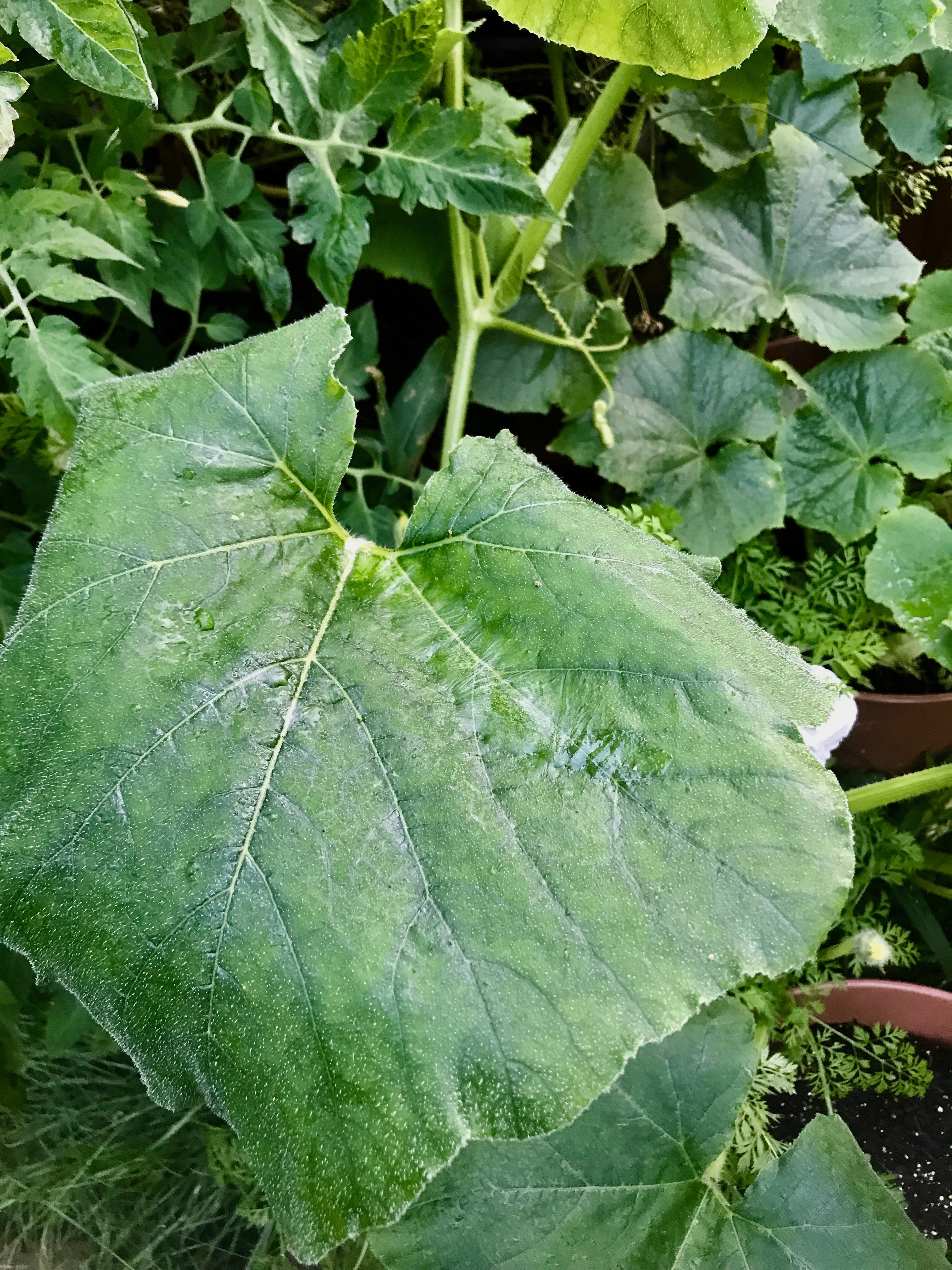
I found this map fascinating. There is almost a month differential across the Fairbanks Borough on the date of the first freeze this fall. I was in the August 18 Camp, which my zucchini never really recovered from.
Many of the recording areas with “After Sept 14”, will fall today, the 15th, as we are expected to drop into the Blue Zone by morning. My place was at 23F on Tuesday morning.
Officially, the Fairbanks Airport is on a decent streak of 135 days above freezing. Which is the fourth longest since recording began. 144 days is the record, which happened in 1974.
There was a 4.9 magnitude earthquake just east of Fairbanks on Monday night, just before 10pm. The cabin went through a decent shake.
It was 32F degrees at the cabin at 6am Wednesday morning. A bit early to be scraping the windshield before work, even for us. I did no plant protection, and they took a hit, but hopefully not a direct one.
Public service announcement from the City of Valdez
An ice-dammed lake above the Valdez Glacier is undergoing an outburst event, which started on Friday. Water levels in Valdez Creek and Valdez Lake will be seeing a considerable rise.
This is a biannual event, which usually happens in mid June and then again in the fall. Water builds up in the lake above the glacier until the pressure raises the ice, and the water flows down the mountain.
The dammed lake
The image above shows the lake caught behind the ice dam. The ice wall in the picture is approximately 200 feet high.
First image credit: City of Valdez; Second image credit: National Weather Service
The village of Buckland, which is located in Northwest Alaska, started to see the water rise on May 12, due to an ice dam on the Buckland River. As one can see from the image, the village was quickly flooded out, with over five feet of water throughout the community, cutting the villagers off from the airstrip.
A disaster was declared by the governor on Monday, and water started to recede on Tuesday. The damage will be extensive, but details won’t be known until the water drops further.
Buckland, Alaska
Buckland, or Nunatchiaq in Iñupiaq, is an Inupiat village of approximately 416 people. Residents have lived at different points along the Buckland River over the centuries, but relocated to the current location in the 1920’s due to the villages reindeer herd. The community was incorporated in 1966.
It is mainly a subsistence lifestyle in Buckland, with residents relying on hunting, fishing and trade for survival. Caribou, beluga whale and seal are a major source of food. The reindeer herd of 2000 provides some jobs, where the payment is made in the form of meat. There are also some jobs through the school, city and health clinic.
Map of Buckland, Alaska
Photos credit: The State of Alaska; additional source information courtesy of the Native Village of Buckland
Ducks, geese, swans and cranes have all come back to the neighborhood. The back pond still has ice, although it’s looking more than a bit dodgy and should go out this weekend. The beaver is patrolling the edges, occasionally flushing a pair of mallards from the open water to the ice, where they stand patiently waiting for the open water to be beaver free. Even the gulls are back, swooping low over the pond’s edge looking for the perfect nesting spot.
The ice has gone out on the Tanana River in Nenana, Alaska. Officially, the tripod moved enough downstream to trip the clock at 12:50 AST on April 30. The jackpot for the 2021 Nenana Ice Classic is $233,591.
National Park Week, Day IV; Today’s Park Theme: Transformation Tuesday
Map of Kenai Fjords National Park
Kenai Fjords: Where Mountains, Ice and Ocean meet.
Kenai Fjords was first designated a National Monument in 1978. With the passage of ANILCA, the Alaska National Interest Lands Conservation Act in 1980, Kenai Fjords officially became a National Park.
Exit Glacier
Kenai Fjords encompasses 669,984 acres, which includes the massive Harding Icefield, which is the source of at least 38 glaciers.
Climbing up to Exit Glacier; Camera: Leica M3, Film: TMax100
Exit Glacier and the Harding Icefield can be reached from the community of Seward. It’s a short drive from town to the visitor center and trail head. The short and relatively easy trail takes one to the foot of the glacier. Exit is retreating at a pretty good clip, and is now losing ice during all seasons.
The Harding Icefield
The Harding Icefield covers over 700 square miles, and that does NOT include the 38-40 glaciers that spawn from it. The hike past Exit Glacier to the icefield can be described as strenuous, but the view, when clear, is absolutely amazing.
An emergency shelter surrounded by the Harding Icefield
Harding Icefield is one of four remaining in the United States, and the largest that is contained completely within the country. It receives, on average, 400 inches of snow each year.
Bear Glacier as seen from Resurrection Bay
Much of the Park is only accessible by water, and sea kayaking is a very popular activity. There are many tidewater glaciers that can be reached from Seward.
Kayakers dwarfed by Aialik Glacier
Two glaciers that I have visited from Seward are: Bear, which is the longest glacier in the Park, and Aialik Glacier, which is a bit more impressive from the water. Bear has receded to the point, that a lake now exists between the ocean and the glacier. The lake is often filled with small icebergs, which makes kayaking interesting. Aialik is a giant ice wall from the water’s surface.
Kenai Fjords National Park received 321,596 visitors in 2018. It is the fourth most visited Park in Alaska, and the closest to the city of Anchorage.
National Park Week Day II; Today’s Park Theme: Volunteer Sunday
The Chitina River en route to McCarthy
Wrangell-St Elias may very well be my favorite road accessible park in Alaska. Denali is closer, and I visit it the most, but Wrangell-St Elias is a trip of its own. First off, it is the largest National Park at 13.2 million acres. It starts at sea level and rises all the way up to 18,008 feet with the summit of Mount St Elias, which is the second highest peak in the United States.
Mount Blackburn
Within Wrangell-St Elias is four mountain ranges: The Chugach, Wrangell, St Elias, and the eastern part of the Alaska Range. Mount Wrangell is one of the largest active volcanoes in North America, and nine of the sixteen tallest peaks in the U.S. are within the boundaries of Wrangell-St Elias.
If you prefer glaciers, Wrangell-St Elias has you covered with 60% of Alaska’s glacier ice within this park. It has the state’s longest tidewater glacier, North America’s largest piedmont glacier, and the world’s longest valley glacier.
The park offers an endless list of things to do. The hiking here is phenomenal, although established trails are few. The beating heart of this park is wilderness. I have seen the gamut of Alaska wildlife with Wrangell-St Elias.
The Kennecott Mine
The Edgerton Highway runs along the Copper River Valley to Chitina, where the McCarthy Road follows the old CR&NW Railway grade to the Kennicott River. For years, you had to stop there to take a tram across the river to the town of McCarthy and the mines of Kennecott. Today, the tram sits unused, and a walking bridge spans the river.
The Kennecott Mine and company town were named after the Kennicott Glacier, but they missed the spelling by a letter. It gets confusing trying to keep it straight. Copper ore was discovered here in 1900, and a rush soon started. Eventually, Kennecott would have five mines operating, but by 1938 operations had shut down. During that time span, the mines produced over 4.6 million tons of copper ore, and gross revenues of $200 million. I’m not sure what that dollar amount would add up to today. The Kennecott Mines are now a National Historic Landmark District.
McCarthy, Alaska in 1915McCarthy Hardware in 2011
The population of McCarthy in 1920 was 127. By 2010 it had dropped to 28.
Some of the mines like Jumbo can be hiked to, and the green of copper ore can still be seen in the rocks around the area.
Fishing the Copper and Chitina Rivers is an Alaskan tradition, going back millenniums. Dipnetting for salmon is restricted to Alaska residents, but I can tell you that it is an adventure like no other.
If you want a park that you can disappear into, Wrangell-St Elias may just be the place for you. 2018 saw only 79,450 to the nation’s largest park. Like Alaska in general, that’s a lot of elbow room.
Muldrow Glacier in Denali National Park is surging:
Muldrow Glacier, with Traleika Glacier coming in from the top left
In early March, pilot Chris Palm, who took the photo above, noticed something very different about Denali Park’s famed Muldrow Glacier. The normally smooth surface of the glacier was broken up by crevasses stretching across the width of Muldrow.
The long awaited surge had begun.
The 39 mile long, Muldrow Glacier last surged in 1957, so scientists were thrilled to study a natural phenomenon that has not occurred here in 64 years.
Surge-type glaciers are relatively rare, with approximately 1% of the glaciers world-wide being surge glaciers. Denali National Park has several, most of which get their start from the face of North America’s tallest peak.
Newly formed transverse crevasses on Muldrow
As snow and ice builds up at the higher elevations of a glacier, meltwater is also building up underneath the glacier. This meltwater acts as a lubricant when the weight from above passes equilibrium. The glacier then surges downward at a rate of up to 100 times faster than normal. At some point, the meltwater trapped under the glacier will be released in an outburst flood. Once the water is reduced significantly, the glacier’s surge will slow and it will go back to a state of quiescent (non-surge) once again. Over time, the process repeats itself. Muldrow Glacier has a history of surging roughly every 50 years.
An animated time-lapse of Muldrow Glacier on the northeast flank of Denali. The starting time is August 2018.
There are two GPS stations on the glacier to monitor its movement. There are also four time-lapse cameras facing different areas of the glacier, including one at the terminus to monitor the glacier’s “bulldozing action”. Another is looking over the McKinley River in order to capture images of the outburst flood. The Alaska Earthquake Center also has a seismic monitoring station, and a sound station has also been installed in an attempt to capture the grinding sound of the surging glacier.
Mapping Muldrow’s movement
In 1957, most accounts have the surge starting in May, 1956 on Traleika Glacier, which is the main tributary of Muldrow. Muldrow Glacier would advance over 4 miles before the surge ended in September of 1957. Approximately 3.3 cubic kilometers of ice was redistributed from the upper reaches of the glacier to its toe. At the upper levels, the ice thickness had dropped as much as 170 meters, but the toe rose to a 200 foot tall ice wall.
Currently, the Muldrow Glacier is moving between 10 to 20 meters per day, and is only 800 meters short of the 1957 terminus. At the current rate of surge, Muldrow will reach the 1957 distance in June.
All images, photos and maps are courtesy of the NPS; Sources include: NPS – Denali NP&P, Alaska Department of Natural Resources, University of Alaska – Fairbanks